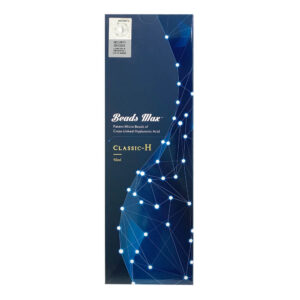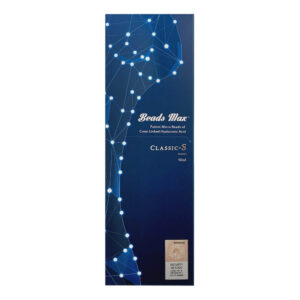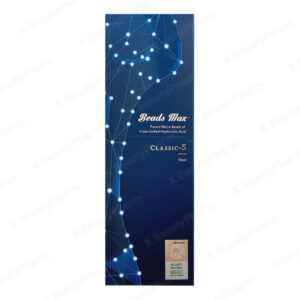

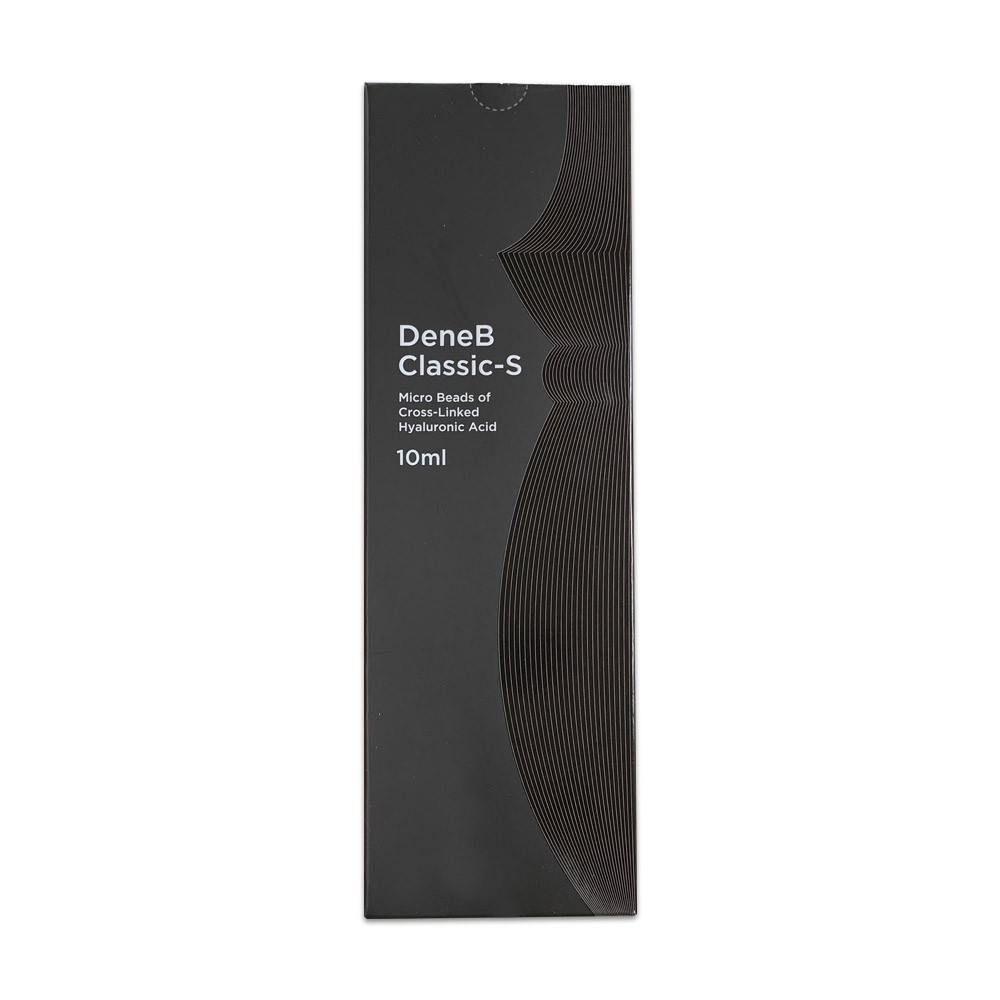
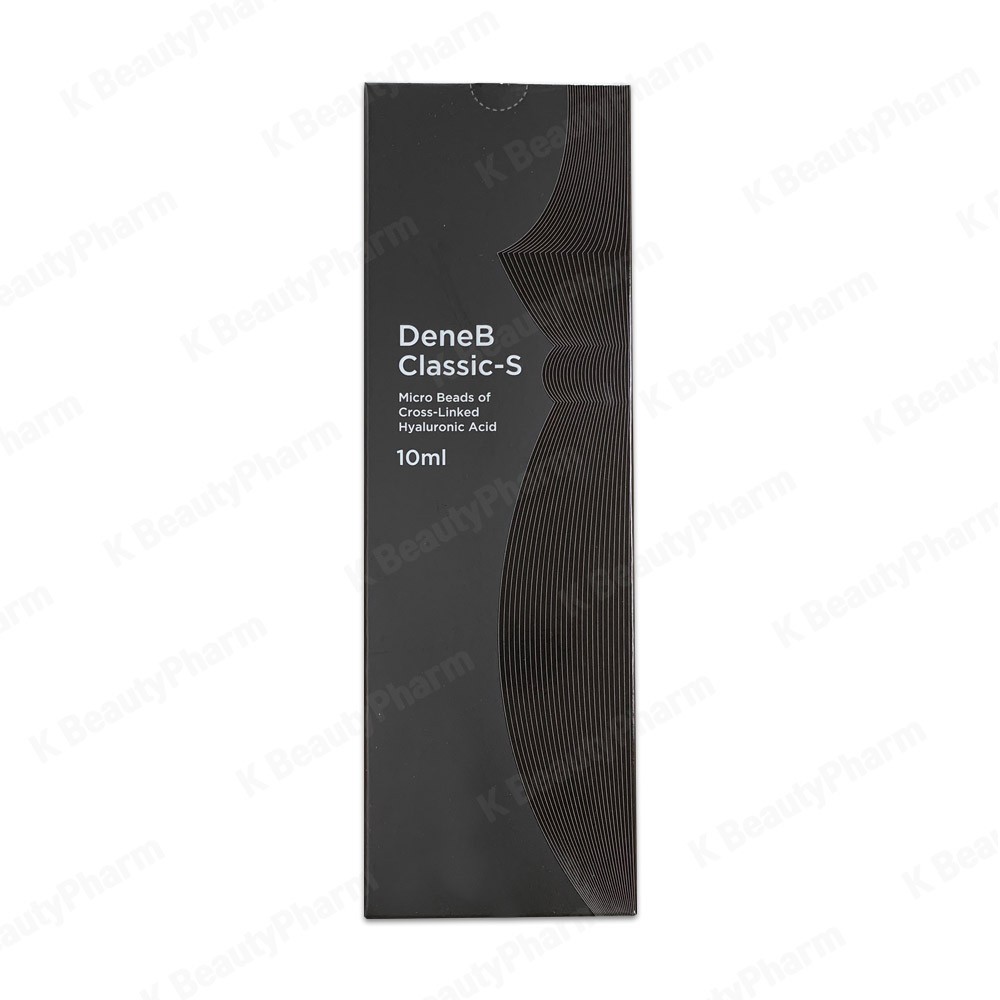


DeneB Classic – S
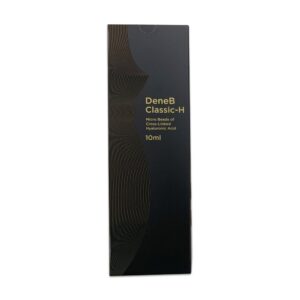
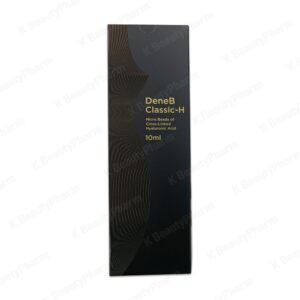
DeneB Classic-S is a South Korean hyaluronic acid body filler developed by BioPlus for professional aesthetic use. It combines a 20 mg/mL HA formula, a soft gel texture, and cross-linking technology designed for controlled contouring and long-lasting support. Because it sits in the softer part of the DeneB range, it may suit treatments where shape, flexibility, and a more natural finish matter more than firm projection.
Key Features
- 20mg/mL cross-linked sodium hyaluronate
- Soft-density body contouring filler
- Manufactured in South Korea
- Available with or without lidocaine
- Uses proprietary MCL cross-linking technology
- Non-animal derived hyaluronic acid
- Long-lasting volume enhancement
- Natural-looking contouring results
- 10mL pre-filled syringe format
What Is DeneB Classic-S?
DeneB Classic-S is a soft, CE-approved cross-linked hyaluronic acid filler manufactured using BioPlus’ proprietary Multi-Cross Linking (MCL) technology and advanced purification process. The product is designed to provide long-lasting volume support while maintaining flexibility and natural movement within treated areas.
The chemical backbone of DeneB Classic-S is glucosamine — specifically, a repeating disaccharide of D-glucuronic acid and N-acetyl-D-glucosamine. That structure is identical to HA found endogenously in human skin, which is precisely why the biocompatibility profile tends to be favorable.
Critically, BioPlus does not source their HA from animal tissue. That eliminates the zoonotic disease transfer risk associated with avian-derived HA products, and it sidesteps a common category of hypersensitivity reactions. Practitioners working with immunocompromised or allergy-prone patients may find that relevant.
Product Specifications
| Specification | Details |
| Product Name | DeneB Classic-S |
| Manufacturer | BioPlus Co., Ltd. |
| Country of Origin | South Korea |
| Active Ingredient | Sodium Hyaluronate |
| HA Concentration | 20mg/mL |
| Syringe Size | 1 × 10mL pre-filled syringe |
| Gel type | Monophasic, micro-bead-based semi-solid gel |
| Technology | MCL Cross-Linking Technology |
| Purification method | Patented MDM (Multi-step Dissolution Method) technology |
| Shelf Life | 36 Months |
| Duration Of Effect | 12-16 Month |
| Storage Temperature | 2°C – 25°C (Do not freeze, Keep it away from direct sunlight and don’t open the packaging until use) |
| Product type | Medical Device Class III |
How DeneB Classic-S Works
DeneB Classic-S utilizes cross-linked hyaluronic acid to restore volume and improve contour definition in treated areas. Once injected, the gel integrates into the surrounding tissue and attracts water molecules, helping create fullness, hydration, and structural support.
The soft gel consistency allows practitioners to achieve smooth, natural contours while maintaining flexibility within the treatment area. This balance makes DeneB Classic-S particularly useful when a softer aesthetic outcome is preferred.
Benefits of Cross-Linked Hyaluronic Acid
- Provides immediate volume enhancement
- Helps retain moisture within tissues
- Supports natural-looking contours
- Maintains shape after injection
- Offers long-lasting aesthetic results
- Biocompatible and biodegradable
Treatment Areas
DeneB Classic-S is commonly used for:
- Buttocks — contouring, mild volume augmentation
- Breasts — non-surgical enhancement, shape refinement
- Hands — volume restoration, rejuvenation
- Genital regions — labia, penile augmentation (specialized clinical use)
- Neckline / décolletage — smoothing and moderate volumization
Depending on practitioner assessment and local regulatory guidelines, DeneB Classic-S may also be used for:
- Deep wrinkle correction
- Facial volume support
- Lip enhancement
- Contour refinement
Key Benefits of DeneB Classic-S
- Soft and Natural-Looking Results – Designed with a softer gel profile that helps create smooth contours and a natural tissue-like feel.
- Effective Volume Enhancement – Adds volume and shape to targeted areas while maintaining balanced, natural-looking proportions.
- 20mg/mL Cross-Linked Hyaluronic Acid – Provides reliable structural support and helps maintain volume over an extended period.
- Excellent Moldability – The gel is easy to shape and contour, allowing practitioners to achieve precise aesthetic outcomes.
- Long-Lasting Performance – Advanced cross-linking technology helps slow HA degradation, with results typically lasting 12–16 months depending on individual factors.
- High-Purity Formula – Manufactured using BioPlus’ purification process to help minimize residual impurities and support product quality.
- Hydration Support – Hyaluronic acid naturally attracts and retains moisture, contributing to a fuller and smoother appearance.
- Smooth Injection Experience – The soft consistency and lower extrusion force may improve handling and injection control for practitioners.
- Non-Animal Derived HA – Produced using biofermented hyaluronic acid, making it suitable for patients seeking non-animal sourced fillers.
- Versatile Body Contouring Solution – Commonly used for body shaping, volume correction, and contour enhancement in aesthetic treatments.
Why Choose DeneB Classic-S?
DeneB Classic-S combines advanced cross-linking technology, a high-purity hyaluronic acid formula, and a soft gel profile to deliver natural-looking body contouring results. Designed for professional aesthetic treatments, it offers reliable volume enhancement, smooth tissue integration, and long-lasting performance for a variety of body shaping applications.
How Long Does DeneB Classic-S Last?
Results typically last between 12 and 16 months, although duration may vary based on several factors:
- Treatment area
- Injection depth
- Individual metabolism
- Lifestyle factors
- Practitioner technique
- Post-treatment care
Some patients may experience results lasting up to 18 months depending on individual circumstances.
Behind the Tech: How MCL & MDM Work
This is where DeneB really separates itself from conventional hyaluronic acid (HA) fillers—and if you care about performance, the technical details are well worth a look.
Most traditional fillers try to boost longevity using a pretty blunt instrument: they simply pump up the HA concentration or chunk up the particle size. But as BioPlus points out—and they make a fair point—just throwing more material at the problem doesn’t actually improve the cross-linking quality.
In fact, a higher concentration without refined cross-linking usually backfires, leaving you with a gel that’s stiff, lumpy, or prone to breaking down prematurely.
MCL: The Art of Multi-Staged Cross-Linking
The MCL method takes a completely different, highly strategic route. Instead of a rushed, single-step cross-linking process, it builds the gel sequentially from the ground up:
-
Molecule to Molecule: Individual HA molecules are first neatly joined via cross-links.
-
Micelle Formation: These joined molecules form small, clustered associations called micelles.
-
Tight Consolidation: Those micelles then pack together into tight, highly structured particles.
-
The Final Matrix: The end result is a smooth, high-cohesion, monophasic matrix.
By engineering the gel step-by-step, DeneB achieves perfectly dialed-in viscoelasticity. In the Classic-S formula, this translates to a precise extrusion force of 30–35 N. That high level of cohesion means the filler stays exactly where it’s injected, resisting the urge to migrate.
MDM: Cleaning Up the Chemical Footprint
While MCL builds the structure, the MDM (Multi-step Dissolution Method) tackles a different industry headache: leftover chemicals.
Standard filler manufacturing relies on BDDE to link the molecules together, which can leave behind trace chemical residues if the purification process isn’t incredibly thorough. MDM is BioPlus’s proprietary, multi-level purification protocol designed to aggressively sweep out those residues before the gel is packaged.
Disclaimer: Regulatory authorities classify DeneB Classic-S as a Class III medical device. Because of its advanced nature, only licensed and trained medical professionals—such as physicians, aesthetic nurses, and certified practitioners with specific training in injectable procedures—should administer this product. Medical experts strongly advise against self-administration, as the practice carries serious health risks.